

Meniscus Tear Treatment in Bhopal | Dr. SK Gupta
Our Work Experience
12500+ Successful
Surgeries
21+ Years
Of Experience
10000+ Sports
Persons Treated
25+ States Serve
from the Country
250 International
Stature Awards Ach.
98.33% Satisfaction
Happy Patient Index
Get An Expert Opinion
Knee & Shoulder Surgeon
About Dr. S.K. Gupta
M.S. (Ortho.) Mumbai,
M.R.C.S., F.I.A.S. (Japan),
F.A.P.O.A. (Singapore),
- Arthroscopy,
- Joint Reconstruction,
- Sport Injury Surgery.

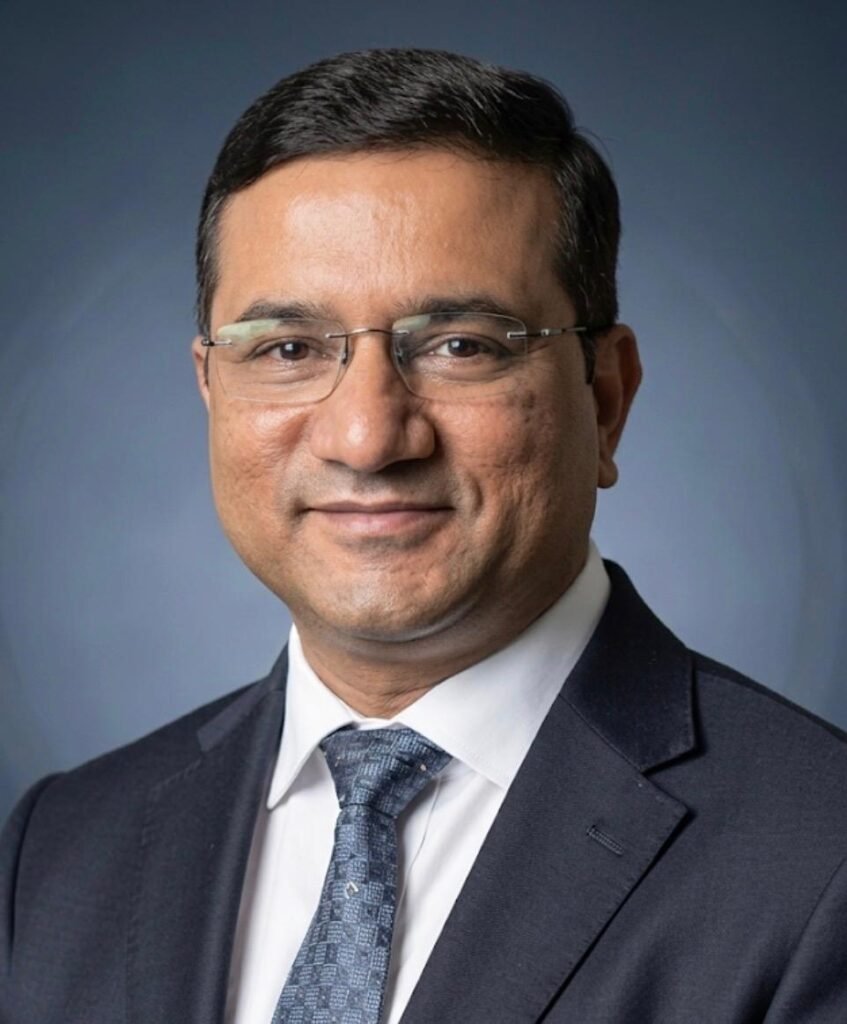
Dr. S.K. Gupta Contribution In Meniscus Tear Preservation Repair
- Dr SK Gupta is fondly known as ‘The Meniscus Man of India’ in the community of Arthroscopy surgeons of India.
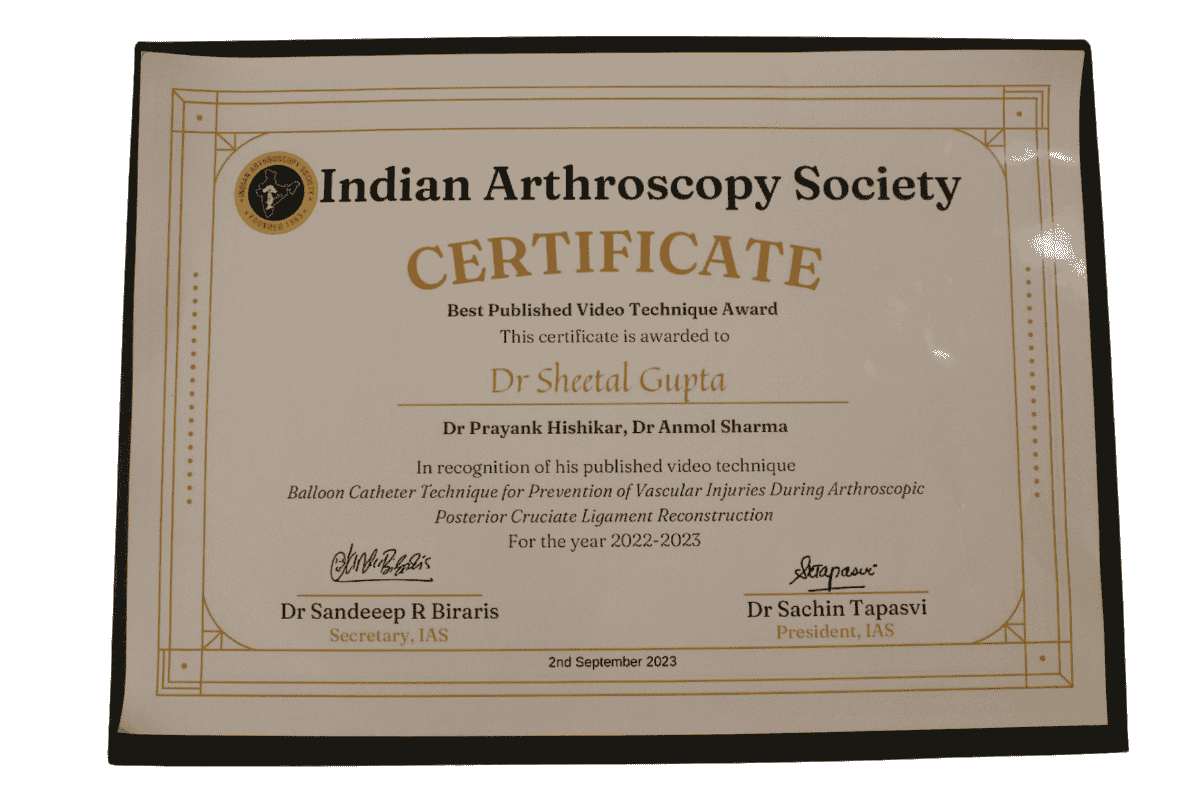
- Who won the award for the best video technique of the year for the meniscus root classification publication 2024.
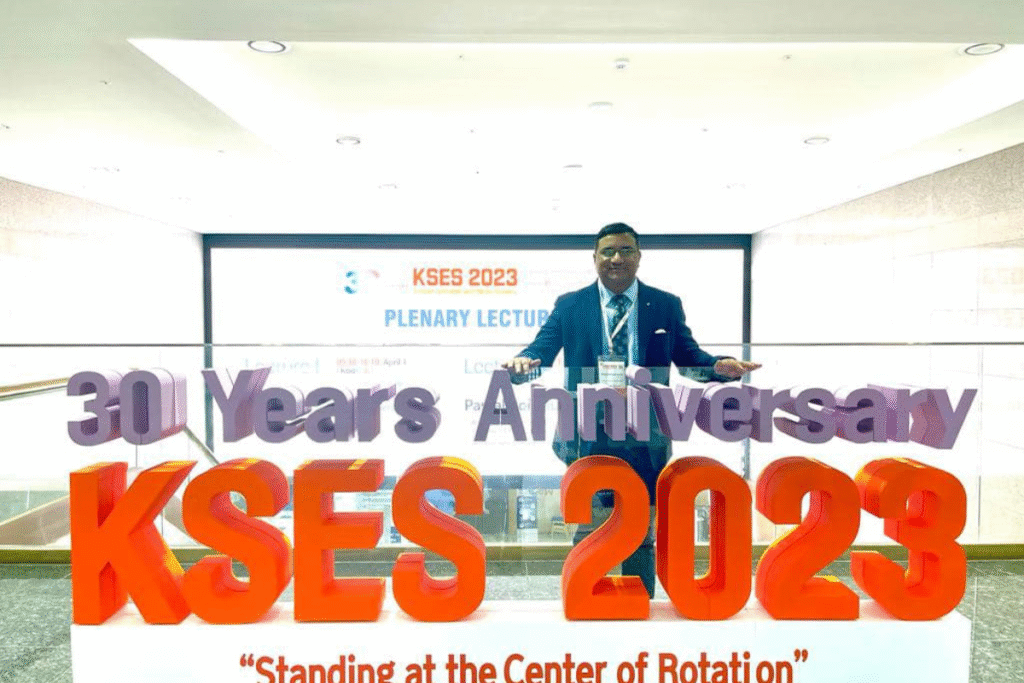
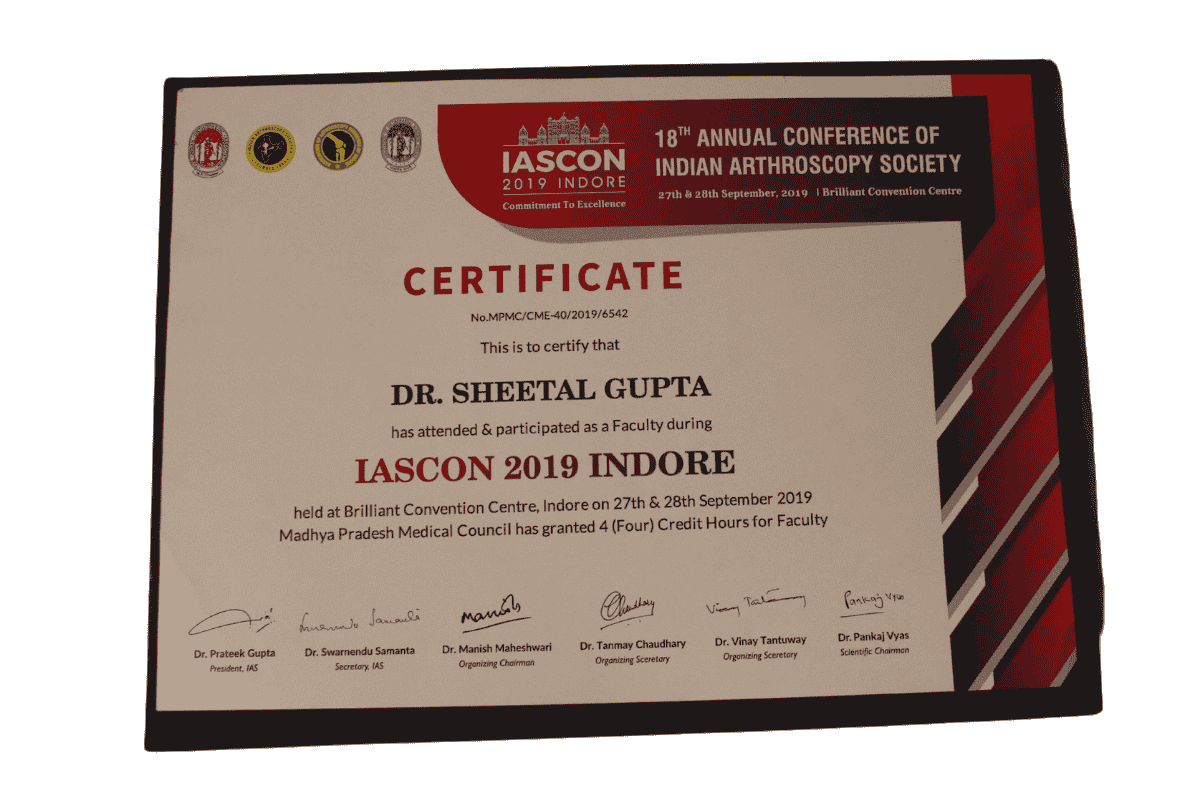
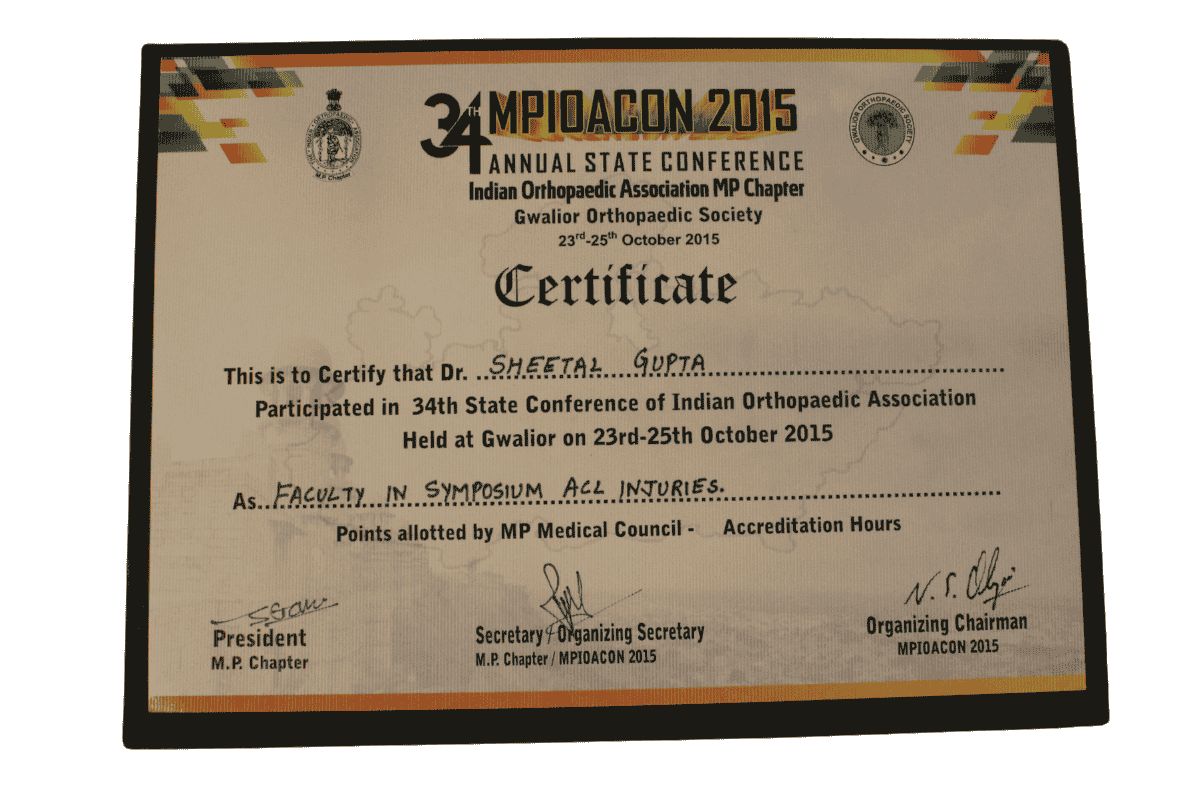
- Faculty Indian Arthroscopy society annual conference IASCON 2024 at Bengaluru done a panel discussion and lecture on meniscus radial tear
- Faculty Chandigarh Arthroscopy course Jun 2024 talk on meniscus and panel discussion on meniscus and cartilage
- Faculty Ganga Arthroscopy course March 2024 performed live meniscus root repair and talk on meniscus repair
- Faculty KASS Knee 360 Kolkata Feb 2024 performed live ACL surgery and talk on meniscus repair
- Faculty IOACON dec 2023 Lucknow lecture on ramp lesion
- International Faculty at Singapore advance knee symposium Dec 2023 talk on MCL and ramp lesion
- Faculty ASK Symposium Dec 2023 performed live surgery shoulder and talk on meniscus
- Scientific chairman and faculty Complex knee course La Prade at Jaipur Nov 2023 talk on meniscus root repair and panel discussion on meniscus repair
- Faculty Bengaluru Arthroscopy course October 2023 debate on meniscus repair panel discussion on meniscus repair
- Faculty IASCON 2023 September Lucknow talk on ramp repair
- Faculty Raipur arthroscopy meet July 2023 talk on meniscus root with HTO
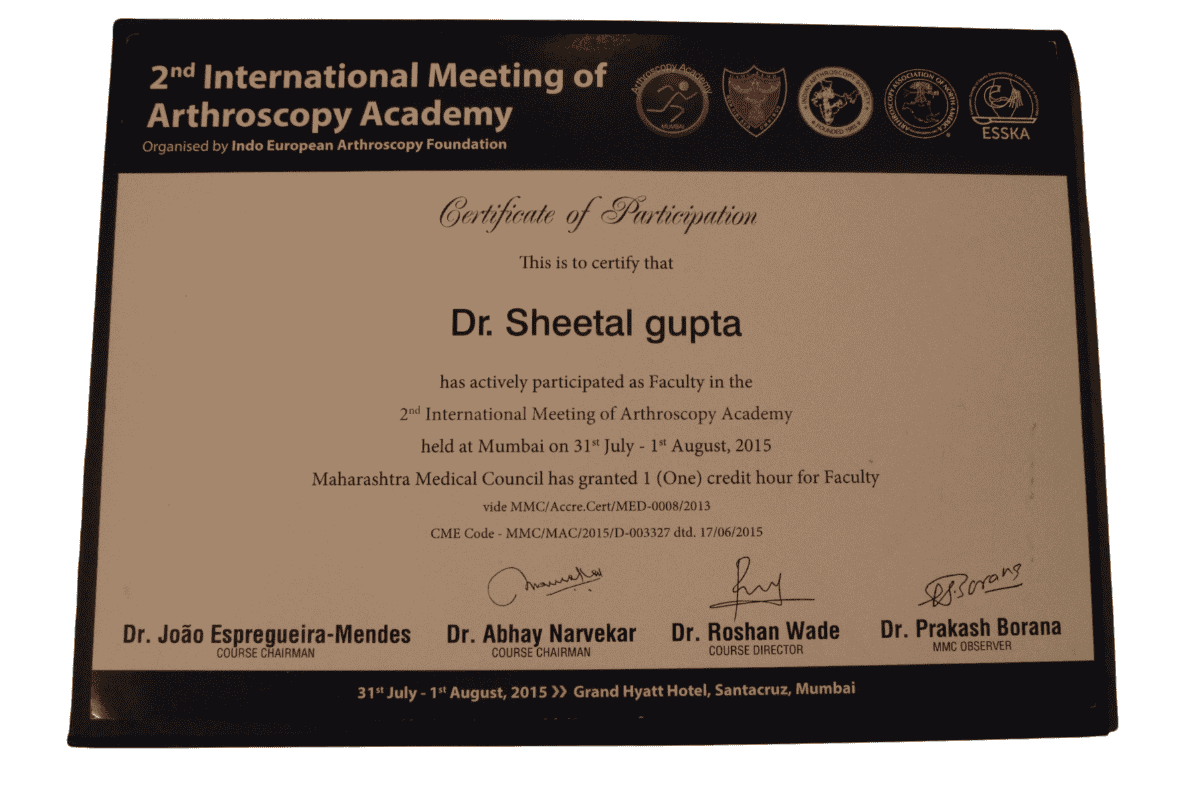
- Faculty 9 th International Arthroscopy Academy meet July 2023 talk on meniscus repair
- Faculty SUSPENSORYCON Goa Feb 2023 talk on meniscus repair
- Faculty Arthroscopy Academy Conference course delivered talk on meniscus root repair and performed live surgery on meniscus repair December 2022
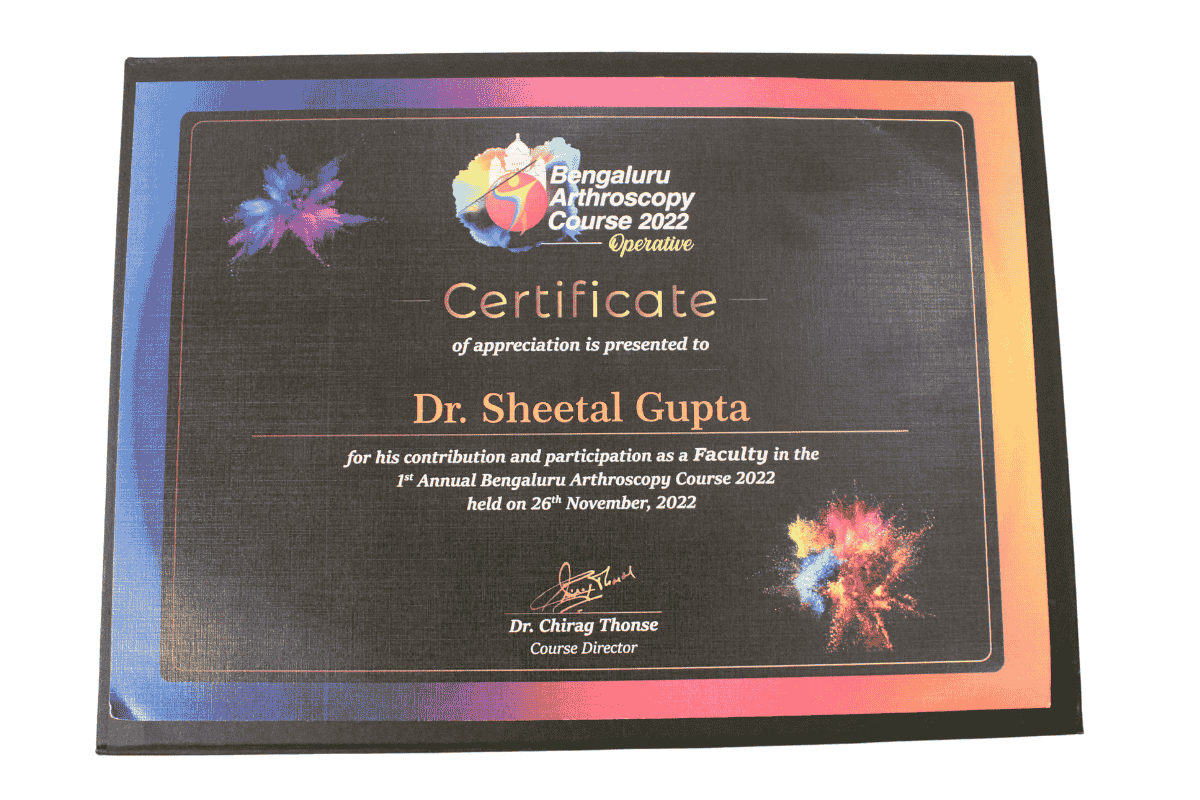
- Faculty Bengaluru Arthroscopy course delivered talk and conducted panel discussion on meniscus repair November 2022
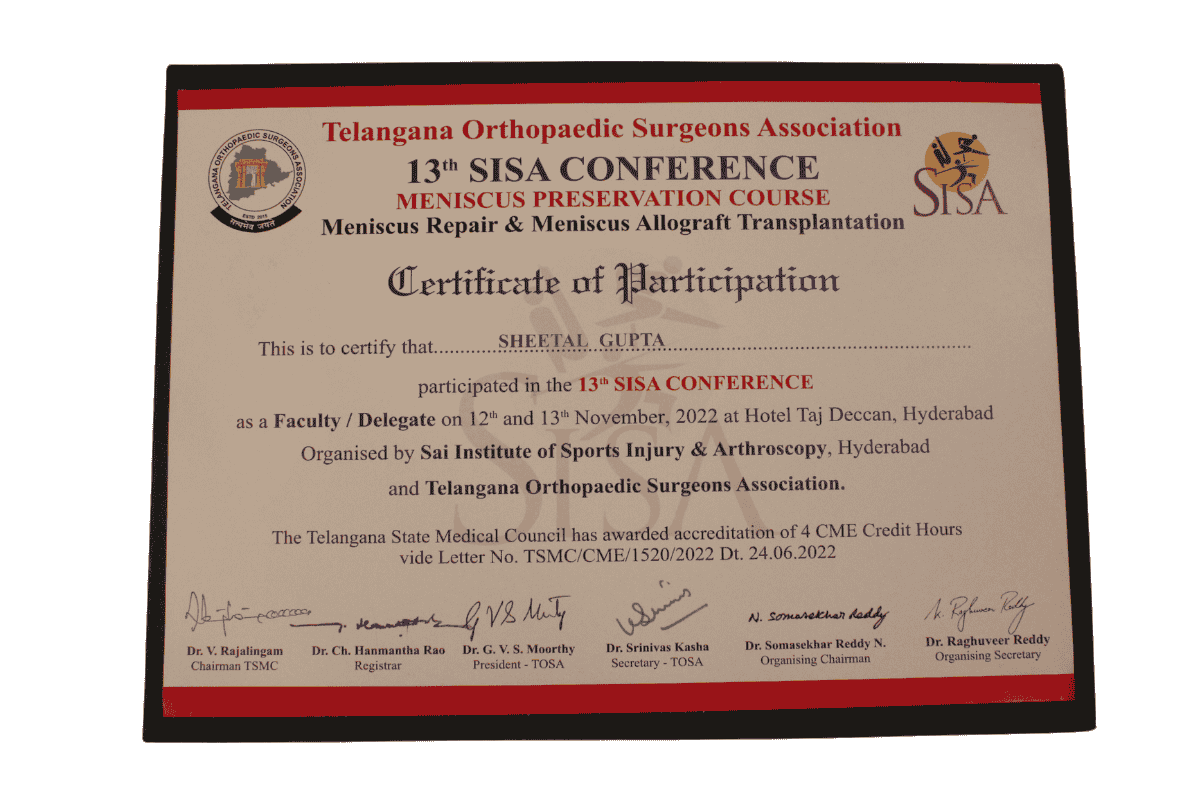
- Faculty Meniscus repair Hyderabad SISA course November 2022
- Faculty Arthrolab Singapore Oct 2022 delivered talk on meniscus repair
- Faculty and delivered talk on meniscus radial repair, ramp repair Indian Arthroscopy society IASCON September 2022
- Faculty and delivered talk on meniscus repair with anchor Pune Knee Course July 2022
- IAS 2010 paper on Arthroscopic meniscus flounce sign.
Publications-
- Meniscus Root Tear: Extended Classification and Arthroscopic Repair Techniques
Arthroscopy Techniques 2024-01 Journal article DOI: 10.1016/j.eats.2023.08.012
- Lateral Meniscus Zip Lesion of Knee: Classification and Repair Methods
Arthroscopy Techniques 2024-04 Journal article DOI: 10.1016/j.eats.2024.102911
- Anatomical Double-Row Lateral Meniscus Root Repair Using Suture Anchors
- Arthroscopy Techniques 2023-10 Journal article DOI: 10.1016/j.eats.2023.06.003
Arthroscopic Meniscus Ramp Repair: The Shoelace Technique
Video Journal of Sports Medicine 2023-07 Journal article DOI: 10.1177/26350254231176832
AMR Sign - An Arthroscopic S-shaped Fold Signifying Adequate Medial Meniscus Repair
Malaysian Orthopaedic Journal 2023-07-01 | Journal article DOI: 10.5704/moj.2307.003
Arthroscopic Ramp Repair: “No-Implant, Pass, Park, and Tie Technique” Using Knee Scorpion
Arthroscopy Techniques 2023-05 Journal article DOI: 10.1016/j.eats.2023.02.005
Call for Phone Assistance
Google Reviews
EXCELLENT Based on 565 reviews
 Posted on Google
 Santosh ShrivasIn Apollo hospital...under guidance of Dr. SK Gupta sir I had completed my ACL reconstruction surgery under sir guidance.....with help of Dr Gupta expertise and skills I gone through a successful surgery. Dr. SK Gupta is a truly good and compassionate surgeon... talking about appolo hospital there the helpful nursing staff, cleanliness and comfort, management team, anesthesia team all provide me with the quick response...after surgery also the nursing staff provide me with the quick response and after surgery treatment... Talking about ACL surgery experience was overall good....the pre surgery process, surgery process, and physical therapy after surgery was also very effective As I experienced I would say For ligament and ACL reconstruction surgery D.R SK Gupta Sir was best and Apollo Hospital was bestPosted on Google
 Satyam KumarDr. S. K. Gupta performed ACL surgery on both of my mother’s knees, and we couldn’t be more grateful for his exceptional care and expertise. He explained the procedure clearly, ensured we were comfortable at every step, and followed up regularly during recovery. The surgeries went smoothly, and my mother is now recovering with great confidence. Dr. Gupta is not only highly skilled but also very compassionate and approachable. His team at the hospital was equally supportive and attentive. I would highly recommend Dr. S. K. Gupta for anyone looking for an experienced and caring orthopedic surgeon in Bhopal.Posted on Google
 Shivank Kashyap> I recently underwent surgery in Apollo SAGE hospital Bhopal and I’m very satisfied with the entire experience of Dr SK Gupta Sir team. The doctors and wtaff were professional, caring, and attentive throughout the process. The procedure went smoothly, and my recovery has been undergoing with SK Gupta Sir team. The doctors was very supportive during my undergoing recovery and visited multiple times a day to help with my issues and guide me with exercises. I’m thankful for his care and concern.Posted on Google
 Shubhanshu UsreteI would like to express my heartfelt gratitude to Dr. S.K. Gupta for the exceptional care and expertise he showed while treating my mother’s (Mrs. Indra Usrete) knee. She recently underwent surgery under his supervision, and we are truly thankful for how smoothly everything went — from pre-surgery counselling to post-operative recovery. Dr. Gupta’s professionalism, patience, and genuine concern for his patients made a huge difference in my mother’s confidence and comfort throughout the process. His ability to clearly explain every step of the treatment helped us feel reassured and informed at all times. I would highly recommend Dr. S.K. Gupta to anyone seeking an experienced, caring, and trustworthy orthopaedic specialist. P.S.- Above is my personal opinion, kindly take proper advise and guidance before treating your dear ones.Posted on Google
 YASH YEWALE
Trustindex verifies that the original source of the review is Google.
Dr. S.K. Gupta and team are doing good jobPosted on Google Dr. Mukesh Chandra BishtI had my knee surgery of acl and meniscus on 3rd October 2025 had a great experience. Dr Gupta is one of the best sports injuries specialist. The junior doctors and all the staff were very professional and everyone knew his/her role.Posted on Google
 Prashant ChaudharyIt's a privilege to having an International level doctor Dr S K Gupta sir (Knee & Shoulder Surgeon) in Central India, Bhopal. Else for the same surgery patients had to visit Mumbai, Delhi etc, now which saves time and money both. Thank you sir for successful ACL replacement of my wife.Posted on Google
 Pushpendra KushwahaDr. Well experienced and polite.. 2 din pahle main visit kiya tha x-ray quility had se jyada poor hai and x-ray staff all time mobile me lage rahte hai unka kam par bilkul dyan nhi rahta .. Jinki laparwahi ki wajah se report proper nhi ati hai aur digonosis sahi se nhi hua .. Ohi poor and galat report ki wajah se muje opass se surgery ka suggestion diya gya jab main second opinion liye other dr. Se to all good and fast recovery results aya..
Patient Success Stories
Our Experience in Numbers
Dr. S.K. Gupta is a renowned surgical orthopedic doctor practising in India.
Introduction
A meniscus tear treatment is one of the most common — and most mismanaged — knee injuries in India. Whether it happens on a football pitch, a kabaddi court, or simply while rising from the floor, a torn meniscus can rob you of stability, mobility, and quality of life. Left untreated or improperly treated, it accelerates cartilage wear and can lead to early knee arthritis.
At Apollo Sage Hospital, Bhopal, Dr. S.K. Gupta — fondly known across India as the “Meniscus Man of India” — offers state-of-the-art arthroscopic meniscus tear reconstruction and meniscectomy. With internationally published surgical techniques, fellowship training in Japan, the UK, Singapore, and Malaysia, and a track record spanning more than 12,500 successful knee and shoulder surgeries, Dr. Gupta is widely regarded as the most trusted meniscus specialist in Central India.
If you are searching for the best meniscus surgeon in Bhopal, Indore, Gwalior, Jabalpur, or anywhere in Madhya Pradesh — you have found the right place.
📞 +91-7610101079 | +91-7611111179
📅 Book Appointment: https://apollosage.in/doctors/dr-s-k-gupta
📍 Apollo Sage Hospital, Bhopal | Orthocity Clinic, Arera Colony, Bhopal
1. What Is the Meniscus and Why Does It Matter?
Quick Answer: The meniscus is a C-shaped cartilage disc in the knee that acts as a shock absorber, weight distributor, and stabilizer. Each knee has two — the medial (inner) and lateral (outer) meniscus. Without them, bone grinds on bone.
The meniscus is not merely a cushion. It bears up to 50–70% of the load transmitted through the knee joint during walking and up to 85% during activities like running and jumping. It also helps lubricate the joint, prevent excessive joint motion, and protect the articular cartilage.
When the meniscus tears, this load-sharing mechanism collapses. Uneven pressure builds on the cartilage, accelerating wear and significantly increasing the risk of osteoarthritis — sometimes within 5–10 years of an untreated tear.
This is precisely why Dr. SK Gupta’s philosophy of meniscus preservation is so important. Every millimetre of meniscus saved is a year of healthy knee function gained.
2. What Is a Meniscus Tear?
Quick Answer: A meniscus tear is damage to the fibrocartilage of the knee joint, caused by sudden twisting, heavy loading, or degenerative wear. It is one of the most common knee injuries, affecting athletes and non-athletes alike.
Meniscus tears occur when the knee is twisted or rotated under load — common in sports like football, kabaddi, badminton, cricket, and wrestling. They can also occur in older adults due to degenerative changes.
Importantly, meniscus tears are frequently associated with other knee ligament injuries — particularly ACL tears. Dr. Gupta’s expertise in multi-ligament and combined injury management ensures that no associated injury is missed during diagnosis.
3. Types of Meniscus Tears
Understanding the type of tear is essential for choosing the right treatment. Dr. SK Gupta — whose extended meniscus root tear classification has been published in Arthroscopy Techniques (2024) — identifies and treats all major tear patterns:
- Radial Tear — Cuts across the width of the meniscus; disrupts load transmission. Requires specific repair techniques.
- Horizontal Tear — Splits the meniscus horizontally into upper and lower halves. Common in middle-aged adults.
- Longitudinal (Bucket-Handle) Tear — A vertical tear running along the length; the displaced fragment can lock the knee. Requires urgent repair.
- Ramp Lesion — A tear at the posterior root-capsule junction, often missed. Dr. Gupta has published the “Shoelace Technique” for arthroscopic ramp repair.
- Root Tear — A tear at the meniscal attachment point; critically disrupts joint mechanics. Dr. Gupta’s extended classification and repair techniques are internationally recognized.
- Complex / Degenerative Tear — Irregular, multi-plane tear common in older patients. May require partial meniscectomy.
- Flap Tear — A piece of meniscus flips into the joint, causing catching or locking.
- Zip Lesion — Described and classified by Dr. SK Gupta in Arthroscopy Techniques (April 2024): a lateral meniscus-specific tear pattern with unique repair methods.
4. Symptoms of a Meniscus Tear
Quick Answer: Meniscus tear symptoms include knee pain, swelling, clicking or locking of the joint, limited bending, and a feeling of knee giving way — especially when twisting or rotating.
- Sharp pain at the inner (medial) or outer (lateral) knee joint line
- Swelling that develops gradually over 24–48 hours after injury
- A popping sensation at the moment of injury
- Knee locking or inability to fully straighten the leg
- Clicking, catching, or grinding during movement
- Stiffness and reduced range of motion
- Feeling of instability — knee feels like it “gives way”
- Pain when climbing stairs, squatting, or rising from a chair
If you experience knee locking, you should seek urgent evaluation, as a displaced bucket-handle tear may require prompt surgical intervention.
5.How Is a Meniscus Tear Diagnosed?
Quick Answer: Diagnosis involves clinical examination, MRI, and sometimes diagnostic arthroscopy. An experienced surgeon like Dr. SK Gupta can clinically identify most tear patterns before imaging.
Clinical Examination
- McMurray’s Test — Compression and rotation of the knee to reproduce symptoms
- Thessaly Test — Weight-bearing rotation to detect meniscal pathology
- Apley’s Grind Test — Distinguishes meniscal from ligamentous pain
- Joint line tenderness assessment
Imaging
- MRI (Gold Standard) — Best non-invasive assessment; identifies tear type, location, and associated ligament injuries. Dr. Gupta’s team carefully evaluates the posterior horn, root attachments, and ramp zones — areas commonly missed elsewhere.
- X-Ray — Rules out fractures and assesses joint space narrowing, which indicates cartilage loss.
- Diagnostic Arthroscopy — In complex or unclear cases, direct visualization gives the definitive picture.
📋 Tip: Send your MRI report to Dr. Gupta’s team online via the contact page for an expert second opinion before deciding on treatment.
6. Meniscus Tear Treatment Options
Quick Answer: Treatment ranges from conservative (rest, physiotherapy) to surgical (arthroscopic repair or meniscectomy), depending on tear type, location, patient age, and activity level.
Conservative (Non-Surgical) Management
Appropriate for small, stable tears in the avascular zone or in older, low-demand patients:
- RICE Protocol: Rest, Ice, Compression, Elevation during the acute phase
- Anti-inflammatory medication (NSAIDs) to control swelling and pain
- Physiotherapy: Quadriceps and hamstring strengthening, proprioception training, gait retraining
- Knee bracing: Offloading the affected compartment
When Surgery Is Recommended
- Tear causing mechanical symptoms (locking, catching)
- Persistent pain despite 6–8 weeks of conservative treatment
- Bucket-handle tear with knee locking
- Root tear (almost always requires repair)
- Young, active patients with repairable tears
- Tear associated with ACL or other ligament injuries
7. What Is Meniscus Reconstruction (Repair)?
Quick Answer: Meniscus repair is an arthroscopic procedure where the torn meniscus is stitched back together, preserving the natural tissue. It is the gold standard for young, active patients with tears in the vascular (outer) zone.
Meniscus repair — or meniscus reconstruction — is Dr. SK Gupta’s preferred approach whenever the tear is repairable. His philosophy: every millimetre of healthy meniscus saved is precious.
Advanced Repair Techniques by Dr. SK Gupta
- All-Inside Meniscus Repair — Using self-cinching implants; minimal additional incisions
- Inside-Out Repair — Strong, multi-suture fixation; ideal for posterior horn tears
- Outside-In Repair — For anterior meniscal tears
- Meniscus Root Repair — Anatomical double-row fixation using suture anchors (published in Arthroscopy Techniques, 2023)
- Ramp Repair — The Shoelace Technique: Dr. Gupta’s internationally published no-implant technique (Video Journal of Sports Medicine, 2023)
- Meniscus Zip Lesion Repair — Dr. Gupta’s own classification and repair description (Arthroscopy Techniques, April 2024)
Ideal Candidates for Meniscus Repair
- Age under 40–45 (with good healing potential)
- Tear in the red-red or red-white zone (blood-supply zone)
- Acute or sub-acute tear (within weeks of injury)
- Athletes and sports persons
- Combined ACL + meniscus tear (simultaneous repair recommended)
8. What Is Meniscectomy — Partial and Total?
Quick Answer: Meniscectomy is the surgical removal of the torn or damaged portion of the meniscus. Partial meniscectomy removes only the damaged fragment; total meniscectomy (rarely done) removes the entire meniscus.
Partial Meniscectomy
The most commonly performed meniscus procedure. The surgeon trims and removes only the torn, unstable fragment while preserving as much healthy meniscus as possible.
- Indicated for: Flap tears, horizontal tears, complex degenerative tears, irreparable radial tears
- Recovery: 4–6 weeks for most daily activities; sports return in 6–10 weeks
- Outcome: Excellent short-term results; long-term outcomes better when maximum meniscus is preserved
Total Meniscectomy
Removal of the entire meniscus. Performed only when the tissue is too damaged for any preservation. Rarely necessary with modern arthroscopic techniques.
Meniscus Transplantation
In younger patients who have undergone total meniscectomy and are developing early joint space narrowing, meniscus transplantation (using donor meniscus tissue) may be considered. This advanced procedure is available at Apollo Sage Hospital.
9. Meniscus Repair vs. Meniscectomy — Which Is Right for You?
Factor | Meniscus Repair | Partial Meniscectomy |
Goal | Preserve meniscus, heal tear | Remove damaged fragment |
Best for | Young athletes, repairable tears | Irreparable tears, older patients |
Recovery time | 4–6 months | 4–8 weeks |
Return to sports | 4–6 months | 6–12 weeks |
Long-term joint health | Superior — preserves function | Risk of arthritis if more tissue lost |
Complexity | Higher | Lower |
Preferred by Dr. SK Gupta | Yes — whenever possible | When repair is not feasible |
Key Insight: Dr. SK Gupta’s internationally recognized expertise means that tears which other surgeons might simply remove, he is often able to repair — preserving your meniscus and protecting your long-term joint health.
10. The Arthroscopic Procedure — Step by Step
Quick Answer: Arthroscopic meniscus surgery is a minimally invasive, keyhole procedure performed under anaesthesia. It takes 45–90 minutes, and most patients go home the same or next day.
Before Surgery
- Thorough pre-operative assessment including blood tests, ECG, and anaesthesia evaluation
- MRI reviewed in detail by Dr. Gupta to plan the surgical approach
- Patient counselled on the procedure, risks, and recovery expectations
- Instructions on fasting (no food or water from midnight the night before)
- All medications reviewed; blood thinners adjusted as needed
During Surgery
- The patient is positioned on the operating table with the knee slightly flexed
- Regional or general anaesthesia is administered
- Two or three tiny (5mm) incisions (portals) are made around the knee
- The arthroscope is inserted — transmitting live HD images of the joint interior to a monitor
- The tear is carefully assessed for type, location, and repairability
- If repairable: Specialized sutures/anchors are passed to approximate the torn edges; the meniscus is secured in anatomical position
- If not repairable: The unstable torn fragment is carefully trimmed, preserving all healthy tissue
- The joint is thoroughly washed, checked for other pathology, and closed with small sutures
After Surgery
- Patient moved to recovery; knee wrapped in a compression bandage
- Ice packs applied to reduce swelling
- Crutches provided; weight-bearing instructions given based on procedure performed
- Same-day or next-day discharge in most cases
Detailed written instructions for home care provided
11. Post-Operative Protocol and Recovery Timeline
Quick Answer: Arthroscopic meniscus surgery is a minimally invasive, keyhole procedure performed under anaesthesia. It takes 45–90 minutes, and most patients go home the same or next day.
After Meniscus Repair
Phase | Timeline | Goals |
Protection Phase | Weeks 0–6 | Partial weight-bearing, crutches, reduce swelling |
Range of Motion | Weeks 4–8 | Regain full bending and straightening |
Strength Building | Weeks 8–16 | Quad, hamstring, and hip strengthening |
Functional Training | Months 4–5 | Jogging, agility, sport-specific drills |
Return to Sport | Month 5–6 | Full competitive return after clearance |
After Partial Meniscectomy
Phase | Timeline | Goals |
Acute Phase | Days 1–5 | Ice, elevation, wound care, reduce swelling |
Early Mobilisation | Week 1–2 | Full weight-bearing, crutches weaned |
Physiotherapy | Weeks 2–6 | Strengthening, flexibility, gait |
Return to Sport | Weeks 6–10 | Sport-specific training and return |
5-Stage Rehabilitation Plan at Apollo Sage Hospital
- Protection & Activation
- Recovery of Range
- Strength Development
- Functional Integration
- Return to Sport (RTS) — with formal RTS testing for athletes
Meniscus Tear Preservation Repair
The meniscus is one of the crucial elements in the knee joint that helps to provide cushioning and stability while aiding the smooth movement of the knee. The tear of a meniscus is one of the most common injuries among athletes and active people. Once it occurs, pain, instability, and inability to move the knee result.
If left untreated, a torn meniscus can lead to further knee damage and degenerative conditions, such as osteoarthritis. Preservation and repair of the meniscus are important to prevent long-term complications and ensure optimal functioning of the knee.
Meniscus repair is often the best treatment for highly active or sports-oriented patients because preserving the meniscus helps maintain proper knee function, reduces pain, and prevents long-term joint damage.
The surgery for meniscus tear preservation and repair is usually done arthroscopically, which is a minimally invasive procedure that involves making small incisions and using a camera to gain a detailed view of the tear inside the knee. This reduces the trauma to surrounding tissues and allows for quicker recovery. The surgery usually takes about one to two hours, and most patients are able to return home the same day. (vid new – what is arthroscopy)
The patient is usually asked to use knee braces and crutches for some weeks after the procedure to avoid excessive pressure on the knee. Additionally, physiotherapy helps to restore strength, flexibility, and mobility in the knee joint so that normal activities can be resumed.
It is an excellent option for patients who have torn or damaged their meniscus and are looking to restore their knee’s function. It reduces pain, discomfort, and instability and allows individuals to return to sports and high-intensity activities with a stronger and more stable knee. It is, therefore, important to ensure that surgical intervention is considered only after exploring all non-surgical treatment options. Consulting with an orthopedic surgeon is important in determining the extent of the tear and the best course of action for the individual’s specific situation.
12. Why Choose Dr. S.K. Gupta — The Meniscus Man of India
Quick Answer: Dr. SK Gupta is India’s leading meniscus specialist — the first Indian arthroscopy surgeon to receive the FAANA Fellowship — with internationally published techniques, 21+ years of experience, and 12,500+ surgeries.
Qualifications & Training
- MS Orthopaedics — Seth G.S. Medical College & K.E.M. Hospital, Mumbai
- FAANA — Fellow, Arthroscopy Association of North America (USA) — first arthroscopy surgeon from India to receive this distinction
- FIAS — Fellow, International Arthroscopy Association (Japan)
- FAPOA — Fellow, Asia Pacific Orthopaedic Association (Singapore)
- International training: Gunma SMRC Japan, Funabashi Sports Medicine Centre Japan, York Surgical Centre UK, Prince of Wales Hospital Hong Kong, IOF Course Singapore, NSM Joint Replacement Course Malaysia
Key Achievements
- Fondly known as “The Meniscus Man of India” by the Indian arthroscopy community
- Best Video Technique Award — Meniscus Root Classification 2024
- First Indian arthroscopy surgeon awarded the FAANA Fellowship
- Recognized by the Abhinav Bindra Foundation Trust as a Centre of Excellence for sports surgeries
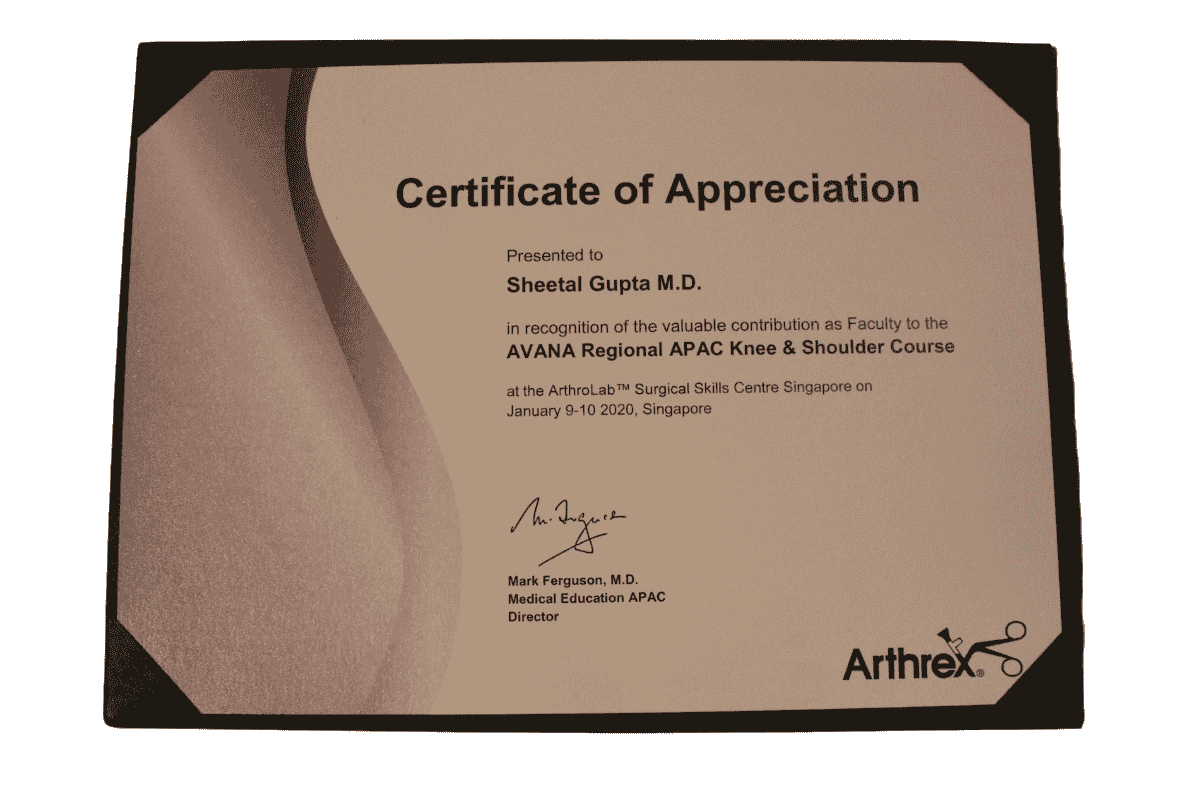
- International Faculty — Singapore Advanced Knee Symposium, Arthrolab Singapore, CLASS Thailand, and many more
Published Research (Selected)
- Meniscus Root Tear: Extended Classification and Arthroscopic Repair Techniques — Arthroscopy Techniques, Jan 2024. DOI: 10.1016/j.eats.2023.08.012
- Lateral Meniscus Zip Lesion of Knee: Classification and Repair Methods — Arthroscopy Techniques, Apr 2024. DOI: 10.1016/j.eats.2024.102911
- Anatomical Double-Row Lateral Meniscus Root Repair Using Suture Anchors — Arthroscopy Techniques, Oct 2023. DOI: 10.1016/j.eats.2023.06.003
- Arthroscopic Meniscus Ramp Repair: The Shoelace Technique — Video Journal of Sports Medicine, Jul 2023. DOI: 10.1177/26350254231176832
- AMR Sign — An Arthroscopic S-shaped Fold Signifying Adequate Medial Meniscus Repair — Malaysian Orthopaedic Journal, Jul 2023. DOI: 10.5704/moj.2307.003
Sports Medicine Legacy
- Former Sports Medicine Consultant to the Indian Senior National Women’s Hockey Team
- Ex-Sports Injury Specialist, Sports Authority of India (SAI)
- Treated Olympic and national champions across Hockey, Judo, Kabaddi, Boxing, Athletics, and more
- Successfully operated 250+ national/international level players who went on to win medals after surgery
13. Why Apollo Sage Hospital Bhopal?
Quick Answer: Apollo Sage Hospital Bhopal is one of Central India’s most advanced arthroscopy centres, equipped with HD arthroscopy towers, high-precision imaging, and a dedicated sports injury rehabilitation unit — under the leadership of Dr. SK Gupta.
World-Class Infrastructure
- State-of-the-art Modular Operation Theatres — HEPA-filtered with International arthroscopy equipment (Karl Storz, Smith & Nephew)
- HD Arthroscopy Towers — providing superior intra-operative visualization
- Advanced Implant Systems — world-class meniscus repair devices and suture anchors
- High-Precision MRI Imaging Support — on site
- Dedicated Physiotherapy & Rehabilitation Centre — sport-specific rehab protocols
- Strict Infection Control — WHO Surgical Safety Checklist; infection rate consistently below 0.1%
Safety Protocols
- Triple-level sterility checks for all implants
- WHO Sign-IN / Time-OUT / Sign-OUT protocol in 100% of patients
- High-Pressure Autoclave and ETO Sterilization
- 7-Level Side Identification Check
- HEPA Filtration — removes 99.97% of airborne particles including bacteria to 0.3 micron size
14. Patient Experience
Patients consistently travel from across Madhya Pradesh — from Indore, Gwalior, Jabalpur, Sagar, Rewa, and Ujjain — and from neighbouring states including Rajasthan, Chhattisgarh, Uttar Pradesh, and Delhi NCR, to consult Dr. SK Gupta specifically for meniscus and ligament conditions.
Their accounts reflect a consistent experience: a surgeon who explains the diagnosis clearly, a team that provides transparent guidance on repair vs. removal, and a rehabilitation protocol customized to the individual. National and international athletes have competed and won after surgery at this centre.
Why Consult Dr. S.K. Gupta for Meniscus Tear Preservation Repair
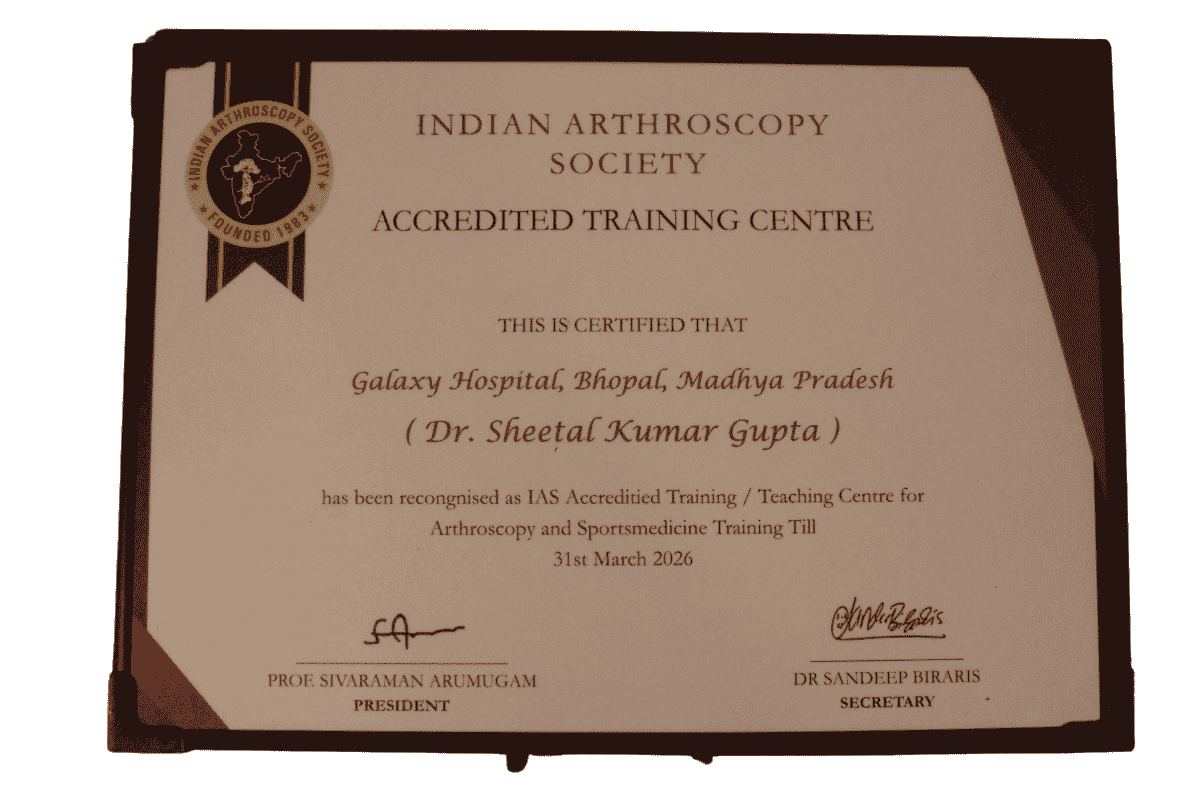
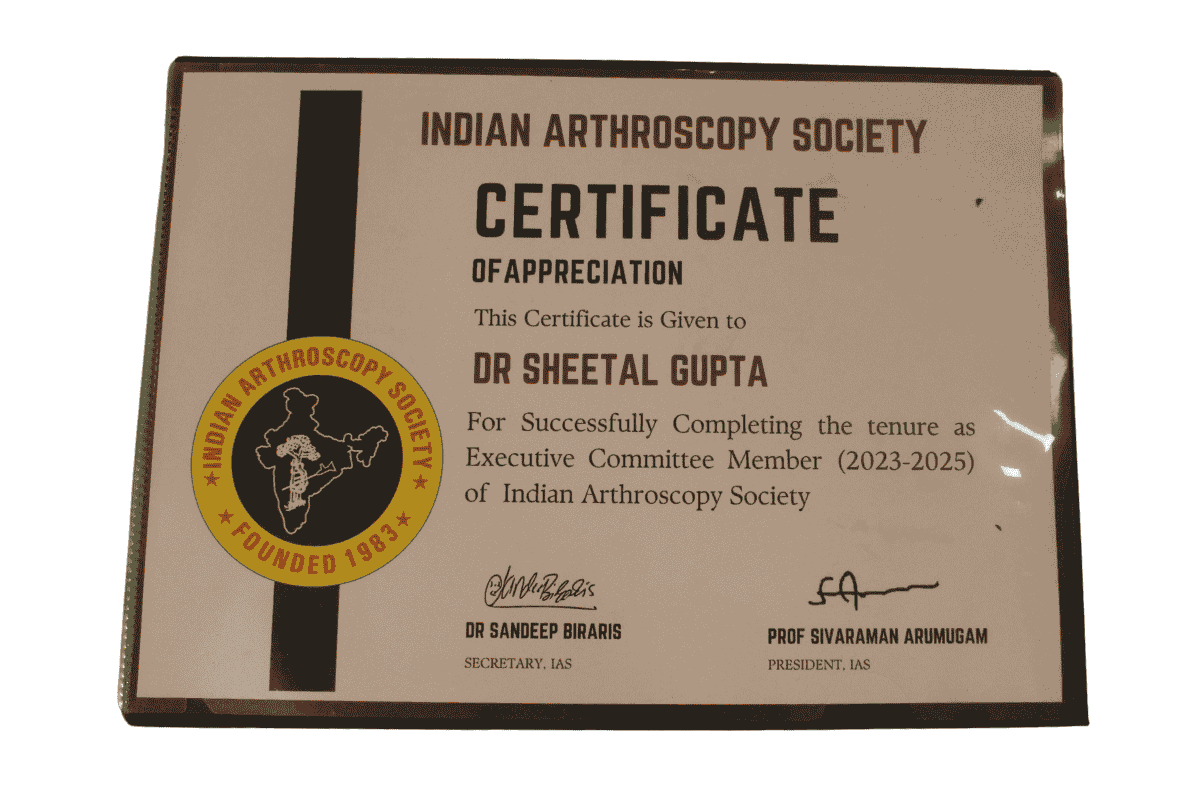
Dr. Sheetal Kumar Gupta is an arthroscopy and sports injury specialist heading the arthroscopy and joint reconstruction unit at apollo sage and galaxy hospital, Bhopal. He has been a consultant for sports medicine, Sports Authority of India & State Sports Academy and is serving National level teams of various disciplines like Hockey, Judo, Kabbadi, Water Sports, Wushu Taikwando etc.
He has done his fellowship in Arthroscopy and Sports medicine from Japan and was trained at various international surgical centres. With an experience of more than 21 years, he has performed over 12000 knee and shoulder surgeries including complex ligament surgeries and surgeries of around more than 8000 National/International level players of various disciplines. He is National and International level faculty for various seminars, conferences and workshops.
Notable Achievements:
- Trained at Japan, Germany, UK, Singapore, Malaysia and Thailand.
- Visiting sports medicine specialist Sports Authority of India (SAI).
- Ex Sports injury specialist to Indian senior Women National Hockey team.
- Ex-Dope control officer, National Anti-doping Agency (NADA).
- National faculty for advance knee and shoulder arthroscopy workshop and conferences.
- Performed more than 8000 arthroscopies independently including knee, shoulder, ankle and hip arthroscopies.
- Successfully operated over 2000 players who are back in sports and have won national and international medals after their surgeries.
- Successfully treated more than 10000 sports players of various disciplines.
- Internationally trained and more than 18 years of experience.
- Has treated National and International level players of Hockey like Sardar Singh, Shivendra, Sandeep Singh, Dilip Tirkey, Sameer Dad ; Olympic champion Ankit Sharma, Commonwealth Karate champion Supriya Jatav, world champions of Judo like Sanathoi, Kalpana Devi, Navjot to name a few and boxing legends like M.C. Mary Kom & Sarita devi.
Types Of Treatments Offered By SKG Ortho Unit.
Dr. S.K. Gupta specializes in problems of shoulder, hip and knee. These are the following types of treatments that the doctor provides.
Sports Injury Treatment
HIP Surgery
Frequently Asked Questions (FAQs)
Q1: What is a meniscus tear?
A: A meniscus tear is damage to the C-shaped cartilage cushion inside the knee joint. It can occur due to sudden twisting, direct impact, or degenerative wear. Symptoms include joint line pain, swelling, clicking, and difficulty bending or straightening the knee fully.
Q2: Can a meniscus tear heal on its own without surgery?
A: Small, stable tears in the outer vascular zone of the meniscus may heal with conservative management — rest, physiotherapy, and anti-inflammatory treatment. However, most significant tears, bucket-handle tears, root tears, and tears causing mechanical symptoms do not heal without surgery.
Q3: What is the difference between meniscus repair and meniscectomy?
A: Meniscus repair stitches the torn cartilage back together, preserving the tissue. Meniscectomy removes the damaged portion. Repair is preferred for younger, active patients with repairable tears because it preserves long-term joint function. Meniscectomy is indicated when the tear cannot be repaired.
Q4: How long does meniscus repair surgery take?
A: Arthroscopic meniscus repair typically takes 45–90 minutes. It is performed under anaesthesia (spinal or general), and most patients are discharged the same day or the following morning.
Q5: What is the recovery time after meniscus repair surgery?
A: After meniscus repair, return to daily activities takes 6–8 weeks; return to sport typically takes 4–6 months. After partial meniscectomy, most patients return to daily activities in 2–3 weeks and sports in 6–12 weeks.
Q6: Is meniscus surgery painful?
A: Post-operative pain is managed effectively with medication and is generally well-controlled. Most patients report manageable discomfort for the first few days, which reduces significantly within a week with physiotherapy and proper care.
Q7: What happens if a meniscus tear is left untreated?
A: An untreated meniscus tear — especially a root tear or bucket-handle tear — leads to progressive cartilage damage, joint space narrowing, and early-onset knee osteoarthritis. This can significantly reduce joint lifespan and ultimately necessitate knee replacement at a younger age.
Q8: Who is the best meniscus surgeon in Bhopal?
A: Dr. S.K. Gupta at Apollo Sage Hospital, Bhopal, is widely regarded as the best meniscus surgeon in Bhopal and Central India. Known as the Meniscus Man of India, he has published internationally recognized meniscus repair techniques and has 21+ years of specialized experience with 12,500+ surgeries.
Q9: Does meniscus repair lead to knee replacement later?
A: Successful meniscus repair protects against future knee replacement by preserving natural joint mechanics. It is untreated or inadequately managed meniscus tears — resulting in cartilage loss — that increase knee replacement risk over time.
Q10: Which is better for sports persons — repair or meniscectomy?
A: For athletes and active individuals, meniscus repair is almost always the preferred option if the tear is repairable. Preserving the meniscus protects against long-term joint damage and allows a full return to competitive sport. Dr. SK Gupta has extensive experience in managing sport-related meniscal injuries.
Q11: What is a meniscus root tear?
A: A meniscus root tear is a tear at the attachment point of the meniscus to the tibia. It completely eliminates the meniscus’s ability to distribute load, dramatically accelerating cartilage wear. Dr. SK Gupta’s extended root tear classification and repair techniques have been published in Arthroscopy Techniques (2023–2024).
Q12: What is a ramp lesion of the meniscus?
A: A ramp lesion is a tear at the posteromedial junction of the medial meniscus and the joint capsule. It is frequently associated with ACL tears and is often missed on MRI and during surgery by less experienced surgeons. Dr. SK Gupta has published the internationally recognized “Shoelace Technique” for arthroscopic ramp repair.
Q13: Can I avoid surgery with physiotherapy alone?
A: Physiotherapy can manage mild, stable tears effectively. However, for mechanical tears (causing locking or catching), root tears, bucket-handle tears, or tears in active individuals, physiotherapy alone does not address the underlying structural damage. A consultation with Dr. SK Gupta will determine the right approach for your specific tear.
Q14: What is the meniscus tear surgery cost in India?
A: The cost of meniscus surgery depends on the type of procedure (repair vs. meniscectomy), implants used, hospital charges, and individual patient factors. For a personalized cost estimate, please contact Dr. SK Gupta’s team directly. Cashless insurance facilities may be available.
Q15: How do I send my MRI for a second opinion to Dr. SK Gupta?
A: You can send your MRI report, X-rays, and clinical history via the contact/appointment page at apollosage.in/doctors/dr-s-k-gupta or via WhatsApp. The team will revert with Dr. Gupta’s expert opinion and guide you on next steps.
Book Your Appointment
If you or someone you know is dealing with knee pain, a locking knee, or a diagnosed meniscus tear, do not wait. Early evaluation and appropriate treatment are the best protection against long-term joint damage.
Dr. S.K. Gupta and his team at Apollo Sage Hospital, Bhopal are here to give you an accurate diagnosis, an honest recommendation, and the best possible surgical and rehabilitation outcome.
📞 Call / WhatsApp: +91-7610101079 | +91-7611111179
📅 Book Online: https://apollosage.in/doctors/dr-s-k-gupta
📍 Apollo Sage Hospital, Bhopal: https://share.google/SXEd0xJbNkufOGGXc
📍 Orthocity Clinic, Arera Colony, Bhopal: https://share.google/QfMSO7rDjztjpYLI2
📧 Send your MRI / X-ray report online for an expert second opinion.
What Happens When You Have a Meniscus Tear?
A meniscus tear is a common knee injury that affects the cartilage in the knee joint. The meniscus acts as a cushion between the femur (thigh bone) and tibia (shin bone), and a tear can cause a variety of symptoms: (vid-ghutna lock kyo hota hai?)
- Pain, especially when twisting or rotating the knee
- Swelling
- Limited range of motion
- A popping sensation at the time of injury
- Tenderness on the inside or outside of the knee
- Difficulty straightening the knee or locking of the knee joint
- Instability or weakness in the knee, causing difficulty with movement
What is Meniscus Repair Surgery?
Meniscus repair surgery is a procedure to treat a tear in the meniscus, aiming to restore the damaged cartilage. There are two main types of meniscus surgeries: ( vid- meniscus surgery recovery..)
Meniscus Suturing: This approach involves stitching the torn pieces of the meniscus together. The procedure is typically used for tears in the outer third of the meniscus (where blood supply is better), allowing the cartilage to heal naturally.
Meniscectomy: In some cases, if the tear is severe and repair is not possible, part of the meniscus may be removed. This is known as a partial meniscectomy, and it helps relieve pain and restore knee function. In some cases, a complete meniscectomy (removal of the entire meniscus) may be necessary.
Does Meniscus Tear Need Surgery?
Not all meniscus tears require surgery. The decision for surgery depends on factors such as:
- The type, location, and size of the tear
- Age and activity level of the individual
- Presence of other knee injuries (e.g., ACL tear)
- Response to conservative treatments
Surgery is usually recommended when the tear causes significant pain, instability, or limits mobility, especially in active individuals or athletes.
What Are the Symptoms of a Meniscus Tear?
Common symptoms of a meniscus tear include:
- Pain at the time of injury or when twisting or rotating the knee
- Swelling or puffiness in the knee joint
- Limited knee movement or difficulty straightening the leg (pic – meniscus knee injury)
- A popping or clicking sound
- Instability, or a feeling that the knee might give out
- Tenderness in the joint line (either inside or outside of the knee)
Does Meniscus Repair Lead to Knee Replacement?
Meniscus repair surgery itself does not directly lead to knee replacement. However, when meniscus tears are left untreated or if the cartilage is significantly damaged over time, the risk of developing osteoarthritis increases. In cases of long-term knee degeneration, knee replacement may be considered.
Proper meniscus repair surgery, combined with rehabilitation and physical therapy, can significantly reduce the likelihood of future knee joint issues.
Treatment Procedure for Meniscus Surgery
Treatment for a meniscus tear may vary depending on the severity of the tear and the individual’s activity level. Options include: (vid- meniscus tear treatment :20 years)
Meniscus Tear Treatment by Home Remedies
In the immediate aftermath of a meniscus injury, certain home remedies can help reduce pain and swelling:
- Rest: Avoid putting weight on the injured knee and allow it to heal.
- Ice: Apply ice to the affected area for 20-30 minutes every few hours to reduce swelling.
- Compression: Use an elastic bandage or compression wrap to minimize swelling.
- Elevation: Keep the knee elevated above the level of the heart to reduce swelling.
Physiotherapy to Treat Meniscus Tear
Physiotherapy is essential for patients with a meniscus tear, especially if surgery is not immediately required. A physiotherapist will guide the patient through exercises that help restore knee strength and flexibility, while also improving overall function.
Physical therapy may include:
- Strengthening exercises for the quadriceps and hamstrings
- Range-of-motion exercises
- Balance and stability training
Surgery for Meniscus Tear Treatment
When non-surgical treatments fail or the tear is severe, surgery may be required. The surgeon may perform either a meniscus repair (suturing the torn pieces) or a meniscectomy (removal of damaged tissue). ( vid new- meniscus repair vs meniscectomy)
Preparation for Meniscus Treatment
Before undergoing treatment for a meniscus tear, your doctor may perform the following tests:
- Physical Examination: To check for tenderness, swelling, and knee instability.
- MRI: To assess the type and extent of the tear and to identify any associated injuries.
- X-rays: To rule out bone fractures or other bone-related issues.
Preparatory Steps for Meniscus Tear Surgery
The doctor may advise the following steps before surgery:
- Fasting Before Surgery: You will be instructed not to eat or drink after midnight before surgery.
- Medication Disclosure: Inform the doctor about any medications, including supplements, to ensure that any required changes to medication are made before surgery.
- Pre-surgery Exercises: You may be asked to do some strengthening exercises in advance to aid recovery after surgery.
- Smoking and Alcohol Avoidance: Smoking and alcohol can hinder the healing process, so it is advisable to refrain from both prior to surgery.
Post-Operative Protocol for Meniscus Surgery
After meniscus repair surgery, patients can expect a recovery process involving several key steps: ( vid -meniscus tear recovery time)
- Rest: Resting the knee to allow healing.
- Elevate and Ice: Applying ice and elevating the leg to reduce swelling.
- Pain Management: Use prescribed pain medications as needed.
- Crutches: You may need crutches or a knee brace for support during the first few weeks of recovery.
- Physical Therapy: Rehabilitation exercises will be necessary to regain knee mobility and strength.
- Avoid Weight-Bearing: Refrain from putting weight on the affected knee for a period of time to ensure proper healing.
Risks and Complications Associated with Meniscus Surgery
- Meniscus Repair reconstruction surgery is highly successful and carries a low risk of complications. However it is important to discuss the same with your doctor before proceeding to surgery.
What happens if meniscus tear is not repaired in time?
(vid- Ghutne ki gaddi )
Meniscus Surgery Cost
The cost of meniscus repair surgery varies depending on factors such as:
- Type of Surgery: A meniscus repair is generally more expensive than a meniscectomy.
- Severity of Injury: More complex or severe tears may require more extensive treatment.
- Hospital/Surgeon: The cost can vary depending on the hospital and the experience of the surgeon.
- Insurance Coverage: Insurance may cover a significant portion of the cost, but this depends on the patient’s policy.
Qualities of a Top Meniscus Surgeon
A skilled orthopedic surgeon who specializes in knee procedures should have:
- Board Certification and Specialization: Certification in orthopedic surgery with expertise in meniscus repairs.
- Experience: A proven track record of successful meniscus surgeries.
- Good Communication: The ability to explain procedures, risks, and recovery expectations clearly.
- Compassionate Care: A patient-focused approach with empathy and support throughout treatment.
How to Choose the Best Meniscus Surgeon
When choosing a surgeon for your meniscus repair, consider the following:
- Referrals: Ask for recommendations from family, friends, or your primary care physician.
- Credentials: Ensure the surgeon is board-certified and has extensive experience in knee surgeries.
- Consultations: Meet with the surgeon to ask questions about the procedure and recovery expectations.
- Reviews: Check online reviews and patient testimonials to assess the surgeon’s reputation.
By choosing a qualified surgeon and following the recommended treatment plan, most patients can return to their normal activities with minimal complications.
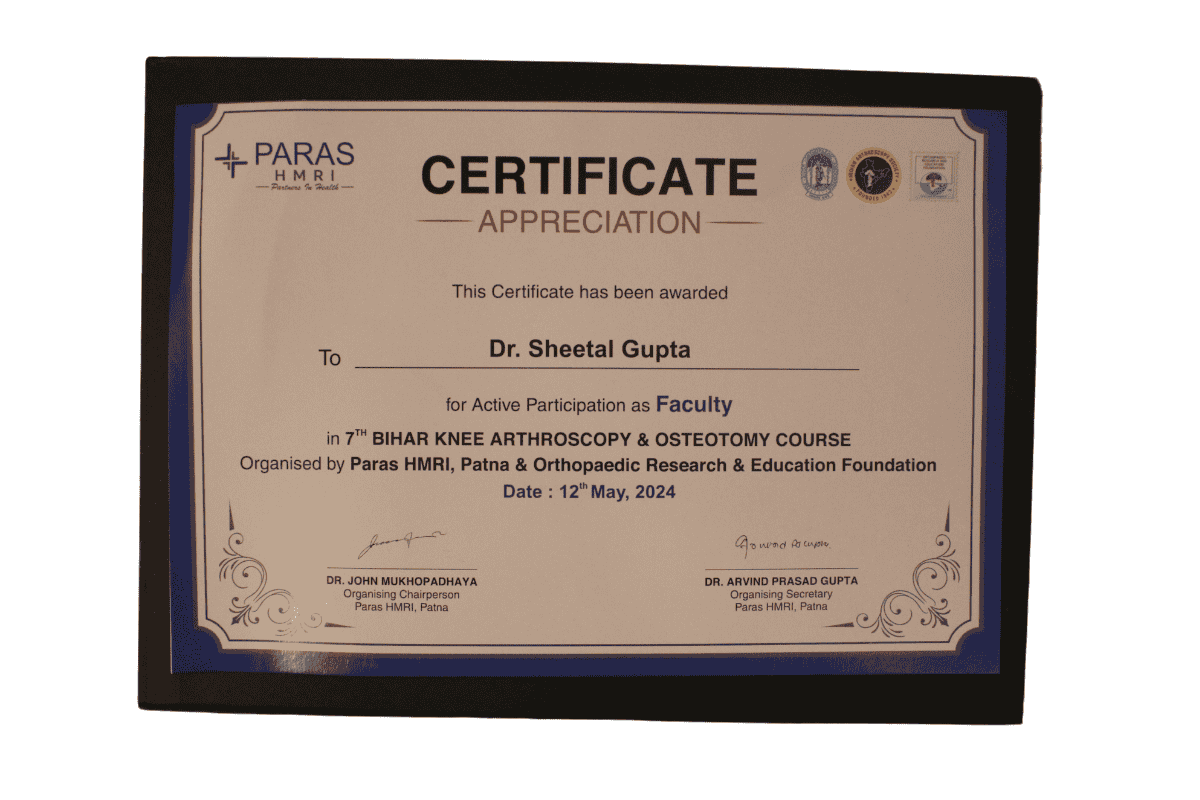
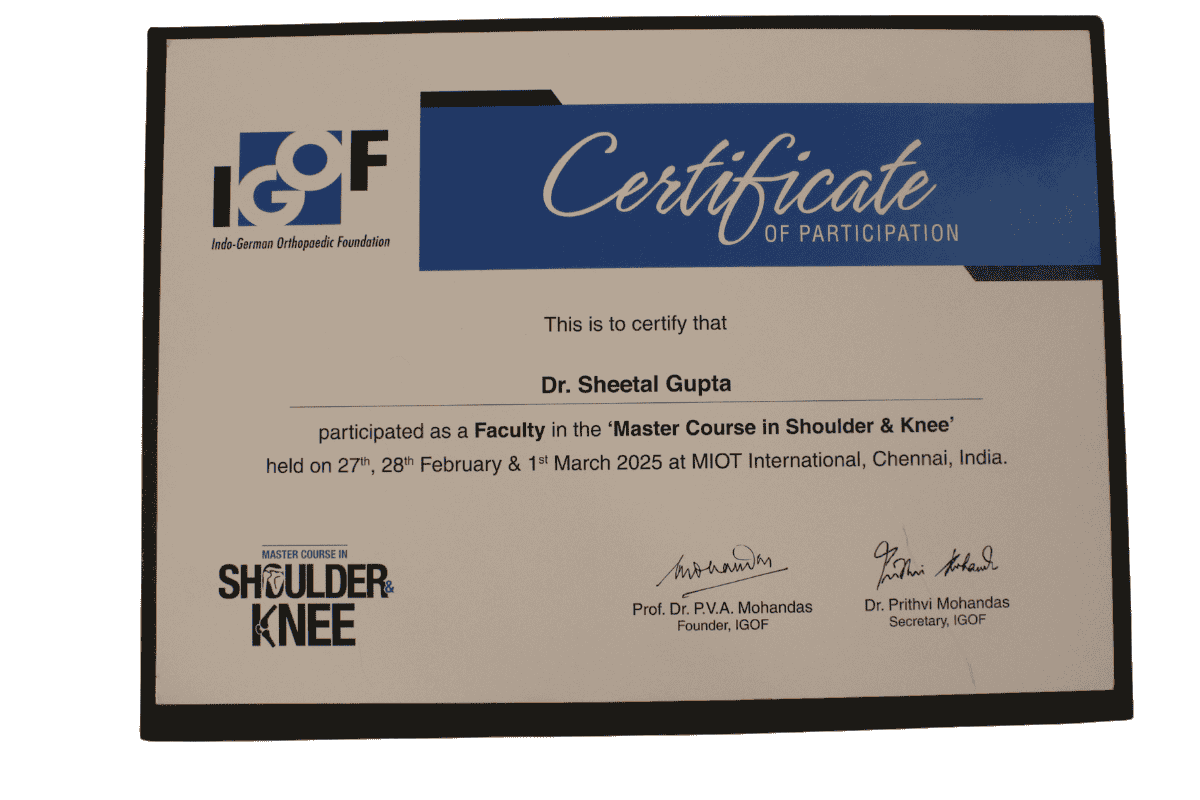
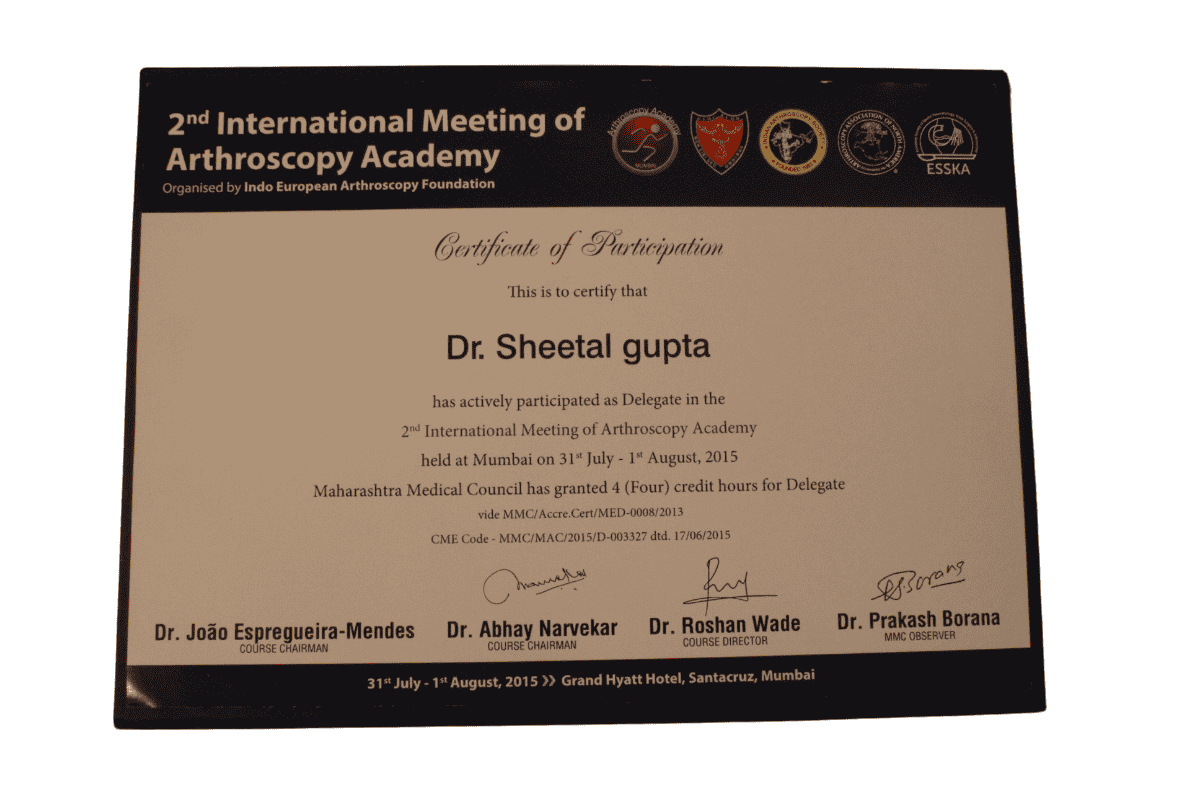
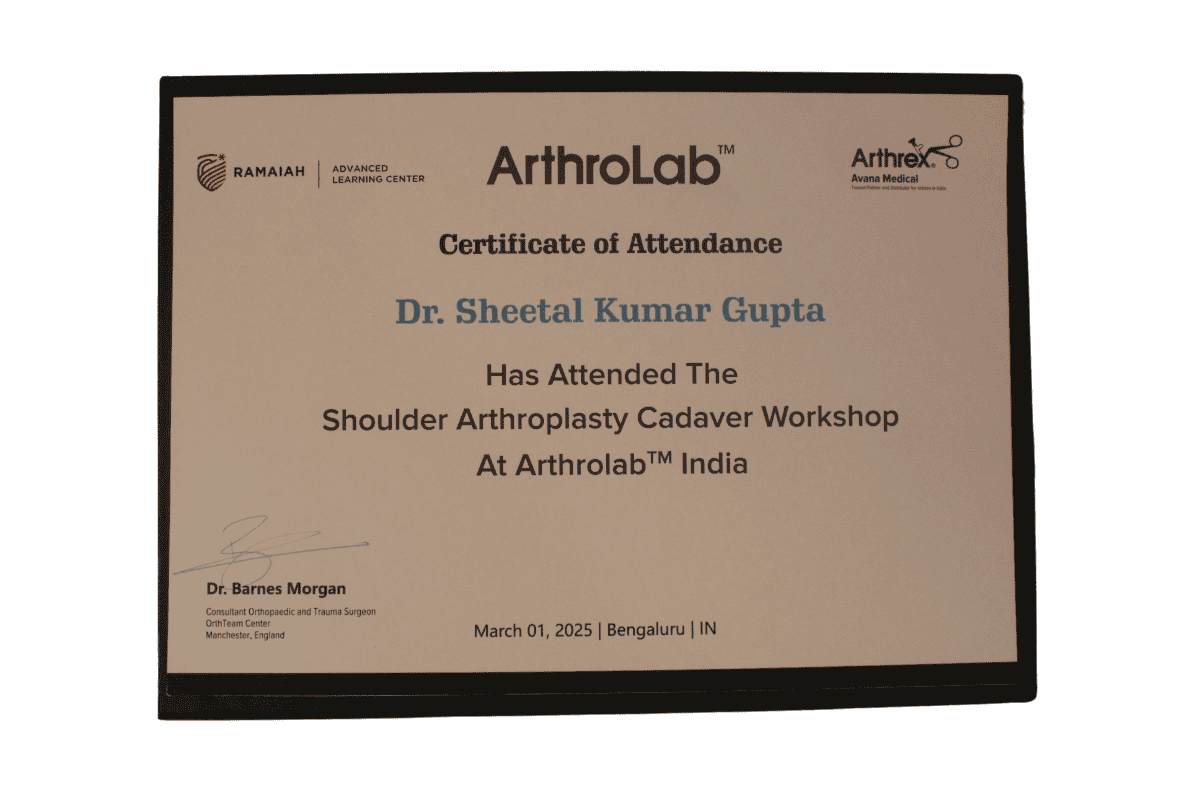
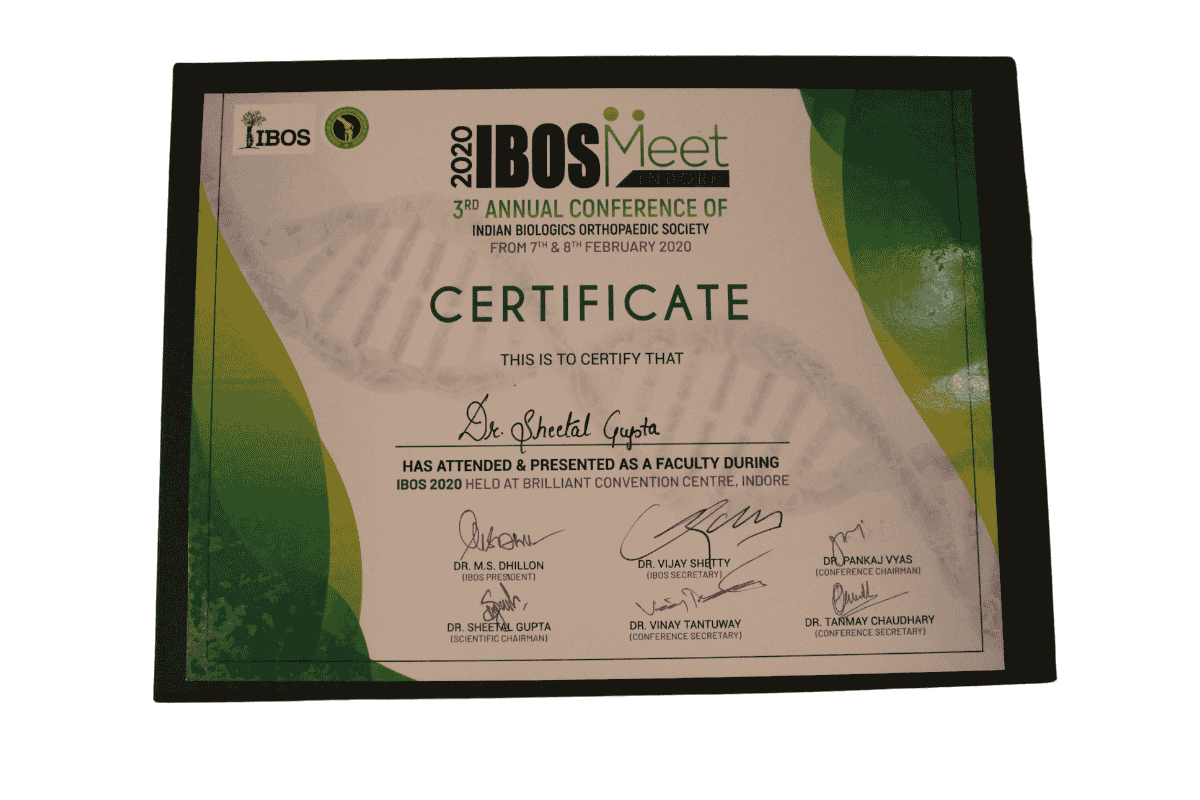
Publications
Author Bio
Dr. S.K. Gupta | MS Ortho. (Mumbai) | FAANA (USA) | FIAS (Japan) | FAPOA (Singapore)
Director — Arthroscopy & Joint Replacement, Apollo Sage Hospital, Bhopal
Dr. S.K. Gupta is a Senior Orthopaedic, Knee & Shoulder Surgeon with 21+ years of experience and 12,500+ surgeries performed. He holds an MS in Orthopaedics from LTMMC Medical College & Sion Hospital Mumbai and international fellowships from Japan, USA, Singapore, and Delhi. Widely known as the “Meniscus Man of India”, he is the first arthroscopy surgeon from India to receive the prestigious FAANA Fellowship and is recognized by the Abhinav Bindra Foundation Trust as a Centre of Excellence for Sports Surgeries. His surgical techniques are published in leading international journals.
Full Profile: https://drskguptaligamentsurgeonindia.com/about-dr/
Medical Disclaimer
The information on this page is intended for general educational purposes only and does not constitute medical advice. It does not replace a professional medical consultation, diagnosis, or treatment recommendation. Every patient’s condition is unique. Please consult Dr. SK Gupta or a qualified orthopaedic surgeon to determine the most appropriate treatment for your individual situation. Do not delay seeking professional medical advice based on information read on this website.
Why Choose Us for Meniscus Tear Treatment
Why choose our "surgeon"?
- Our surgeon Dr S.K Gupta is a world renowned knee and shoulder surgeon with extensive experience of ACL and meniscus surgeries.
- He has over 21 years of focused work-experience in knee and shoulder arthroscopy and12500 + successful surgeries.
- He has experience of successful treatment of hundreds of International and national sports persons.
- His highest level of qualifications and mastery in his work, is the reason of making him first choice for ACL Meniscus treatment by patients from across the country.
Why Choose Us?
- We are dedicated Arthroscopy Centre with highest number of ACL and meniscus surgeries.
- This makes every member of the team in your service, highly competent and experienced for ACL and Meniscus surgery pre-op, intra-op, post-op and rehabilitation management.
- We are well known for affordable cost and cashless facility with combination of best surgeon, best equipments, best implants, and specially trained team for knee and shoulder surgery care.
Why does "surgeon's experience" matter?
- The successful result of surgery depends very much on the detailed and focused expertise of surgeon and his team.
- Experience and skills of your surgeon is the most important factor for successful result.
- You must research well about it, as the primary surgery is the most important chance.
Why choose our "operation theatre" and OT team?
- Hi-Tech modular operation theatres, high precision International equipments for arthroscopy, world class OT machinery specific for knee and shoulder surgery
- Protocol based and highly skilled OT team with focussed work in knee and shoulder arthroscopy plays a vital role in surgical success.
- All our operation theatres are well equipped with planum with HEPA filters. High efficiency HEPA filters can remove 99.97 to 99.99% of airborne particles including smallest bacteria to the size of 0.3 microns. This helps to safeguard our patient from infections.
- The hospital has well defined “infection control guidelines” to be followed by all team members. This helps in reducing the infection rate to less than 0.1%.
- “Triple Level checks” for sterility and disinfection of implants and OT support materials is strictly followed.
- “WHO surgical Safety protocol” for Sign-IN, Time-Out, Sign-Out is adhered to In 100% patients.
- “High pressure autoclave with Pre-Vac” and “ETO sterilization” procedures are used.
- Wheeling in, Wheeling out and anaesthesia safety protocols are strictly followed. One Way Traffic protocol is followed.
- Central Medical gases oxygen and nitrous supply And central suction systems are in place.
- Pressure Dampeners are active to maintain OR pressures. Humidity Checks are done to maintain evidence based recommended guidelines.
Why "post-op care" matters?
KPI (Key Performance Indicators) are being regularly caught, audited and analyzed. Team Galaxy takes utmost care and as a result the captured para are between 0 to 0.13%. This practice is one of the central reasons for our very high success rate.
Post Op care team is regularly following Care Bundles like-
- PVC insertion Care Bundle
- PVR Daily Care Bundle
- Catheter Insertion Care Bundle
- Catheter Daily Care Bundle
- SS care Bundle
- WHO Hand Hygiene Protocol
- Universal Precautions
Patient Safety Protocols being followed are like-
- “7 Level Check” for Side identification
- Pre-Operative Checklist
- BT prep and safety protocol
- Belongings and Material Handover Protocol
- Surgical Site Marking Protocol
- Patient Identification Protocol
- Admission and Discharge Protocol
- Checklist for shifting from OR to Recovery SICU
- Checklist for shifting from SICU to Ward
- The finest details of immediate post-op depends on the expertise of medical, nursing and rehabilitation team.
Why does our "rehabilitation team results" excel?
- The team follows “Surgical age-based assessments and reassessments” to formulate the customized care.
- Rehab is planned “One-O-One as per the milestones achieved” by the patient till visit date.
- Phases of Rehab are scientifically based on division into Macrocycle, Mesocycle and Microcycles of care, the Pre-Injury level of activity, the Surgical details of patient as per the surgeon; and “not one size fits all” method.
- The “5-Staged Plan of Care” of post op rehabilitation is followed for holistic recovery of patients –
- Protection & Activation
- Recovery of Range
- Strength Development
- Functional Integration Inclusion
- RTS If Sports Person
- Sports-Persons’ prolonged follow up to Return To Sports after RTS Testing is followed.
- Regular skill upgrade training of team is done as per new international guidelines.
- Our Physiotherapy team serves large number of ACL and meniscus surgery post operative patients, with close follow up, for return to normal and return to Sports.
- This huge experience in knee and shoulder surgery rehabilitation is the reason for their best results.
- Our successful results are the reason, why our old patients send other patients for similar results.
Contact Us


Happy to Serve Pt. From Various Cities
- Mumbai
- Chennai
- Lucknow
- Bengaluru
- Hyderabad
- Kolkata
- Surat
- Ahmedabad
- Pune
- Jalandhar
- Jaipur
- Jalgaon
- Solapur
- Chandigarh
- Nashik
- Goa
- Ranchi
- Madurai
- Kanpur
- Kochi
- Noida
- Coimbatore
- Jamshedpur
- Ludhiana
- Rajkot
- Amritsar
- Guwahati
- Dehradun
- Bhubaneswar
- Kota
- Agra
- Meerut
- Varanasi
- Aurangabad
- Jodhpur
- Vijaywada
- Raipur
- Sri Nagar
- Vadodara
- Cuttack
- Gwalior
- Nagpur
- Aligarh
- Bhopal
- Jabalpur
- Ujjain
- Udaipur
- Moradabad
- Chhindwara
- Patna
- Indore
- Shahdol
- Umaria
- Sagar
- Dewas
- Mandsaur
- Neemuch
- Ratlam
- Singrauli
- Prayagraj